

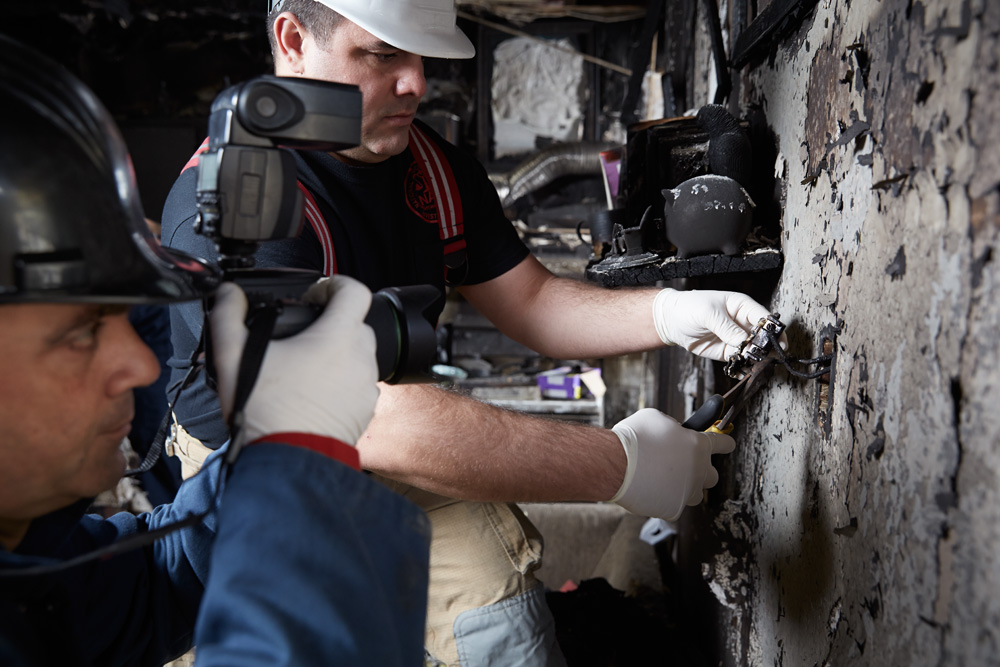
To accurately determine the origin and cause of a fire, forensic engineers conduct a methodical scientific examination of the burn scene. Despite appearing as a complete loss of physical evidence, a fire site often contains subtle indicators that can be analyzed through advanced scientific techniques. Relying on assumptions or basic visual inspections can lead to incorrect conclusions, such as mistaking an arson case for an electrical failure or the reverse.
This can result in serious legal and financial consequences. Recovering the truth behind a fire requires a thorough and data-based approach, focusing on the physical clues left behind by heat and flames.
- Mapping the Origin Through Fire Pattern Analysis
Identifying the exact starting point of a fire is the first essential step in a forensic investigation. Fire spreads in a predictable manner, leaving observable marks on walls, ceilings, and structural elements. Forensic engineers examine these heat and burn patterns to trace the fire’s progression from its final stage back to its origin.
Engineers look for V-shaped patterns on vertical surfaces, as the bottom angle of the V typically points toward the fuel source that started the fire. They also assess the depth of charring on wooden beams and the extent of spalling on concrete surfaces, where intense heat causes internal moisture to expand, leading to the outer layer breaking away. By measuring these degradation patterns, investigators can determine which areas burned the longest and hottest, helping them narrow the search to a specific area, part of the room, or even an appliance.
- Uncovering Truths with Electrical Arc Mapping
Electrical systems are often suspected in fires, but forensic engineering expert witness must determine if a short circuit was the real cause or if external heat damaged the wiring. This is done through a detailed process called electrical arc mapping. The technique involves identifying instances of arcing throughout the building’s electrical system.
When a short circuit occurs before a fire starts, it leaves unique microscopic melting marks, known as globules, on copper or aluminum wires. If the wires melted due to the fire itself, the melting pattern would look different under a microscope. By mapping the location of each arc globule in relation to the circuit breaker panel, engineers can create a timeline of when different circuits failed, helping to confirm or reject the possibility of an electrical malfunction as the fire’s origin.
- Utilizing Gas Chromatography for Accelerant Detection
When there is a suspicion that a fire was set with a liquid fuel, visual inspection alone is not enough to reach a legal conclusion. Arsonists often use accelerants such as gasoline, kerosene, or lighter fluid to speed up a fire’s spread. To detect such substances, forensic engineers collect unburned soil, carpet padding, and charred wood samples from the lowest part of the suspected origin area. These samples are stored in airtight containers to preserve any volatile chemical vapors.
The samples are then sent to a laboratory for gas chromatography-mass spectrometry testing. This scientific method heats the sample to release trapped vapors, separates the chemical compounds, and creates a unique molecular signature. This test can identify the specific type and brand of accelerant used, even if the liquid was significantly diluted by water from firefighting efforts. The presence of foreign petroleum-based hydrocarbons serves as clear evidence of human involvement in the fire.
Conclusion
Forensic engineering transforms a fire scene, which may look like a pile of debris, into a clear sequence of events supported by scientific evidence. By combining field-level visual analysis with advanced tests like arc mapping and gas chromatography, investigators minimize bias in fire analysis. Computer modeling provides the final confirmation, ensuring all conclusions withstand legal and insurance scrutiny. Understanding the precise mechanisms of fire behavior allows these professionals to solve complex cases, protect public safety, and deliver justice based on factual, physical evidence rather than speculation.
